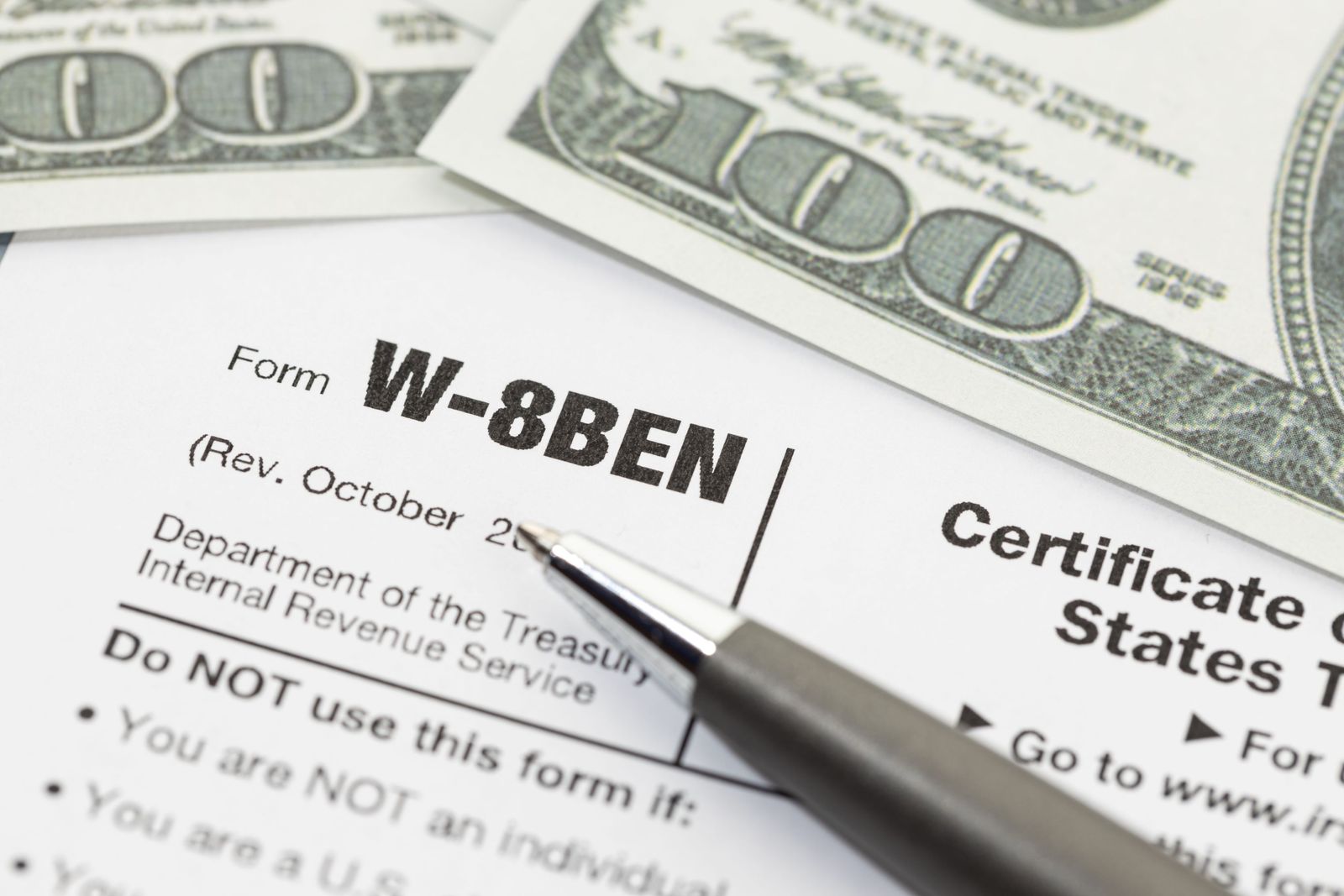
Backup Withholding, TINs and the ITIN Requirement for Foreign Beneficiaries
The guide explains how backup withholding differs from withholding on foreign persons, when a foreign beneficiary of a US estate or trust needs a US taxpayer identification number, and when the home country’s tax number is enough.
By Caroline Esche Ashford, PhD, JD · Updated in September 2026

In brief.
- Backup withholding takes 24 percent of reportable payments, such as interest, dividends and broker proceeds, made to a payee treated as a US person who has failed to provide a correct taxpayer identification number on Form W-9 (I.R.C. § 3406). Withholding on foreign persons is a separate regime at 30 percent or the treaty rate (I.R.C. §§ 1441, 1442).
- Distributions of distributable net income are reported on Schedule K-1 and are not reportable payments for backup withholding purposes; for a foreign beneficiary only chapter 3 withholding applies. The backup withholding risk sits in the accounts of the estate and the heirs at banks and brokers.
- Foreign status is established by a valid Form W-8BEN, which needs no identification number for that purpose. Where a treaty applies, the tax number issued by the beneficiary’s country of residence can carry the treaty claim (Treas. Reg. § 1.1441-6(b)(1)).
- A US number remains necessary for effectively connected income, compensation for services, the FIRPTA forms and every Form 1040-NR, including a refund claim. Individuals obtain an ITIN on Form W-7; an estate or trust uses an employer identification number.
- A mismatch of name and number on a Form 1099 starts a sequence of IRS and payor notices with fixed deadlines, after which backup withholding begins unless a certified number arrives.
The issue
Two assumptions shape much cross-border administration: that a foreign beneficiary needs an ITIN before any treaty rate can apply, and that a thin file exposes the fiduciary’s own distributions to backup withholding. Neither holds in that form. Under the withholding regulations finalized in January 2017, the beneficiary’s home-country tax number can support the treaty claim, and backup withholding belongs to the Form 1099 system, which reaches bank and brokerage accounts rather than distributions reported on Schedule K-1. Each problem has its own document as the cure.
Who the guide is for
The guide addresses executors and trustees preparing a first distribution abroad, the accountants who prepare fiduciary returns and the Form 1042 series, custodians holding estate and trust accounts, and advisors whose clients cannot obtain a US number before a payment falls due.
Presumptions for the undocumented payee
A payment that cannot be associated with valid documentation is presumed made to a US person, and for an individual a foreign mailing address does not change that; for an entity, including an estate or trust, foreign indicia in the file can reverse that presumption. The consequences diverge. A bank paying an heir who has furnished no form treats the heir as a US person, issues a Form 1099 and withholds 24 percent. A trustee that knows the heir lives abroad must instead withhold 30 percent, without any treaty reduction. One Form W-8BEN with the home-country tax number avoids both outcomes.
When a foreign number is enough and when it is not
The guide identifies the cases in which a US number is still required, among them effectively connected income, partnership allocations (I.R.C. § 1446), compensation for personal services, the FIRPTA forms and any return filed with the IRS; income from marketable securities supports a treaty claim without any number. Conversely, since 2018, a Form W-8 for an account at a US office of a financial institution must show the holder’s foreign tax number, or a reasonable explanation, and an individual’s date of birth. A treaty map for twelve countries shows how each treats estate and trust distributions and which number it issues.
ITIN, employer identification number and IRS notices
The guide covers the Form W-7 application: the certified passport copy, acceptance agents, the exceptions that allow an application without a return, the processing times the IRS quotes and expiry after three years without use on a return. It explains how an estate or trust whose fiduciary is abroad obtains its employer identification number by telephone or fax, and which certificate the entity itself furnishes. It then covers TIN matching, the CP2100 and B-notice sequence with its deadlines, the information return penalties and the FIRPTA case, in which the stamped Form 8288-A is held back until the seller supplies a number.
Refunds require a US number
Once the payor’s window for correcting its own over-withholding has closed, excess tax can be recovered only through a return, for an individual a Form 1040-NR, and every return requires a US number. A foreign tax number suffices for the treaty claim but not for the refund. The guide explains why this, rather than any withholding rule, is the reason to start an ITIN application early for a beneficiary who has already been over-withheld.
The questions the guide answers
- Which payments to a foreign beneficiary are exposed to backup withholding, and which fall under chapter 3 alone?
- How do the presumption rules treat an undocumented individual, estate or trust?
- When does a home-country tax number support a treaty claim, and when is a US number indispensable?
- How do the twelve treaties covered treat estate and trust distributions, and which number does each country issue?
- How is an ITIN obtained, under which exception, and how long does it remain valid?
- How does an estate or trust with a fiduciary abroad obtain its employer identification number?
- What must a payor do after a CP2100 notice, and which penalties apply?
- How does a beneficiary recover tax withheld above the treaty rate?
- Part I. Two withholding regimes and the documents that separate them
- Part II. The presumption rules for the undocumented payee
- Part III. When a US TIN is required and when a foreign TIN suffices
- Part IV. The treaty map: twelve partner countries
- Part V. The ITIN: Form W-7 in practice
- Part VI. Estates, trusts and the employer identification number
- Part VII. TIN matching, the CP2100 notice and the B-notice cascade
- Part VIII. The FIRPTA numbers
- Part IX. The refund and credit path
- Part X. Practice points
The firm advises estates, trusts and their fiduciaries on the documentation of beneficiaries and entities, treaty claims supported by home-country tax numbers, Form W-7 applications, employer identification numbers for executors and trustees abroad, Form 1042-S and Form 1099 reporting, responses to IRS notices, withholding certificates on real property sales and refund claims on Form 1040-NR, in coordination with the custodians involved and the beneficiaries’ advisors abroad.
Figures as of October 2026.
This page is general information as of the date stated and is not legal or tax advice. The application of the rules and conventions described depends on the facts of each case.